

The Ultimate Guide to Choosing Copier Paper
Choosing copier paper rarely gets much attention, but it has a bigger impact than many people realise.
The right paper helps your printers and copiers run smoothly, improves the look and feel of your documents, and can reduce waste, downtime and unnecessary cost.
In busy environments such as schools, colleges, legal offices and manufacturing sites, paper is used all day, every day. So, while it may seem like a basic purchase, choosing the right copier paper can make a noticeable difference.
Start with how the paper will be used
Before looking at specifications, think about what the paper needs to do.
A school may be printing lesson packs, letters home, safeguarding documents and internal reports. A manufacturing business may need delivery notes, picking lists, compliance sheets and forms.
These jobs do not all require the same type of paper.
Most organisations benefit from keeping things simple:
- one reliable everyday paper for high-volume printing
- one slightly higher-grade paper for customer-facing or important documents
This approach keeps costs under control while improving quality where it matters most.
Understand paper weight and thickness
Paper weight is measured in gsm, or grams per square metre. It is often used as a quick guide to quality, but it does not tell the full story.
For example, a lower-grade 80gsm paper can feel thin and allow print to show through. Meanwhile, a better-quality 70gsm paper may feel smoother, bulkier and more reliable.
Thickness is measured in microns, and it depends on how the paper is made. When people rub paper between their fingers, they are usually judging thickness and feel rather than weight.
For that reason, gsm should always be considered alongside:
- performance
- opacity
- smoothness
- thickness
- finish
Match the paper to your machines
Your paper choice should suit the equipment it runs through, especially if you print at high volumes, print double-sided, or use finishing units such as booklet makers.
Lower-cost paper can lead to:
- paper jams
- misfeeds
- wasted prints
- unnecessary service calls
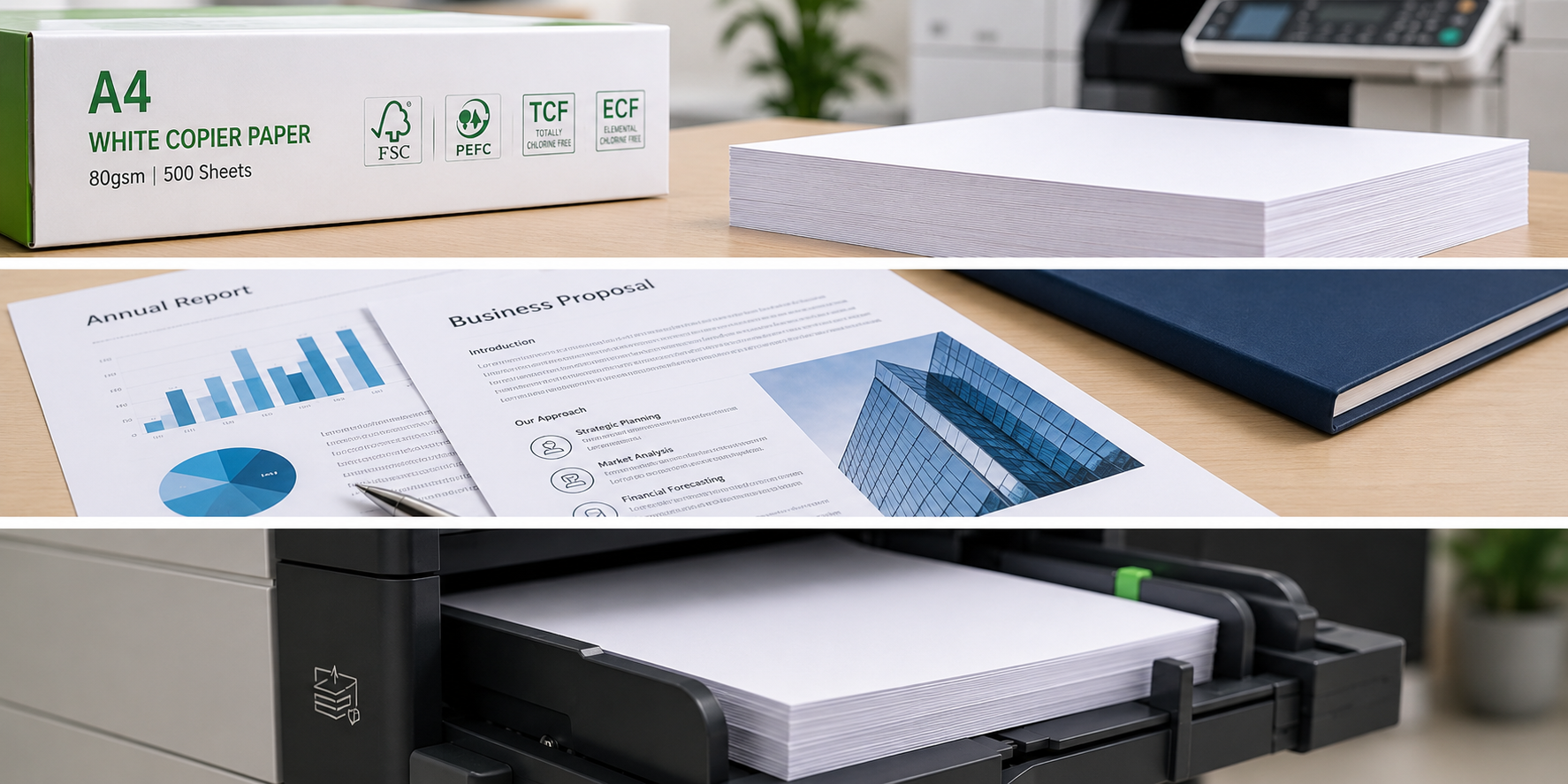
On faster-running machines, even a few jams can waste multiple click charges and interrupt workflow. In many print environments, reliability is worth more than saving a small amount on each ream.
Consider whiteness and readability
CIE measures how white paper is. Higher values, such as CIE160 or above, create a brighter finish, sharper contrast and more vibrant images.
This can make reports, proposals and marketing documents look more professional.
However, very bright paper is not always the best choice for every user. Some people with dyslexia find bright white sheets harder to read.
In education settings, lower-whiteness options such as Dune Bio can help:
- reduce visual strain
- improve readability
- make printed materials more comfortable to use
This is particularly worth considering when producing materials that are read in volume.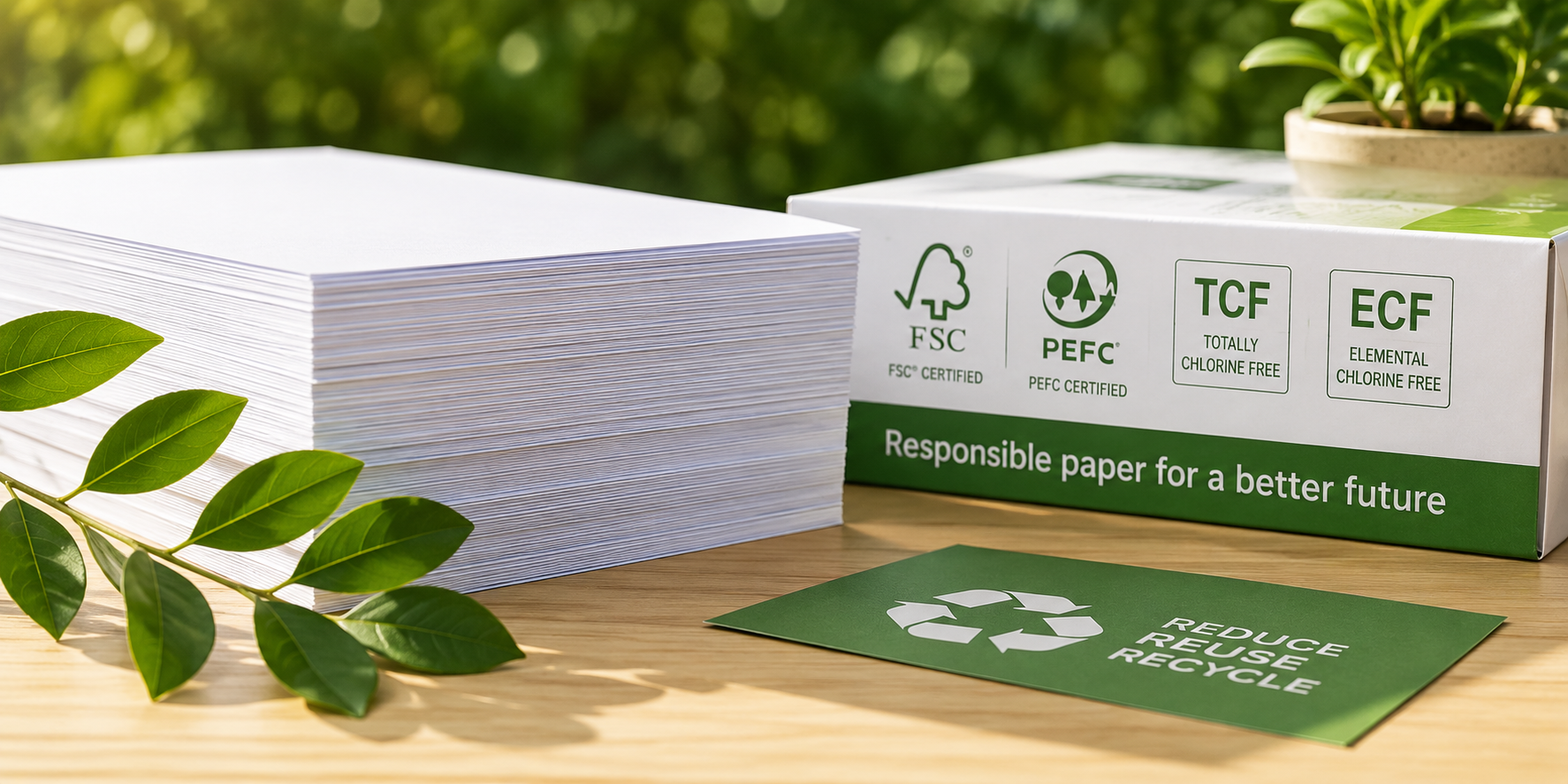
Think about sustainability
Sustainability now plays a major role in purchasing decisions.
It is not just about recycled content. It also includes responsible sourcing, production methods and transport impact.
For example:
- Paper manufactured in Asia can have a carbon footprint of around 500kg CO₂ per ream
- Paper produced in parts of Europe, such as Sweden or Portugal, can be closer to 86kg CO₂ per ream
Many Polycopy products are sourced from responsibly managed forests and are available with:
- FSC certification
- PEFC certification
- TCF options
- ECF options
This helps organisations balance performance with environmental responsibility. Read more about our sustainability promise 👉 click here
Consistency matters
Not all branded paper stays the same.
Some suppliers use one brand name across several paper mills, meaning the paper inside the wrapper can change while the packaging looks identical. That can cause problems if a product that once worked well suddenly starts behaving differently.
Sticking with a consistent, proven paper helps reduce risk and keeps print quality reliable.
Cost versus value
Paper is often compared by price per ream, but the cheapest option is not always the best value.
Poor-quality paper can increase:
- jams
- waste
- maintenance issues
- lost time
A slightly better paper can improve reliability, reduce disruption and often deliver stronger sustainability credentials too.
Speak to Polycopy
Choosing copier paper properly helps keep your print environment running smoothly, reduces waste and improves the quality of your printed materials.
The right choice depends on:
- how the paper is used
- the equipment it runs through
- thickness as well as weight
- whiteness and readability
- sustainability and consistency
Taking a bit of time to get this right usually pays off quickly in day-to-day use.
If you would like help selecting the right paper for your machines, usage and budget, speak to the Polycopy team.
Call Polycopy for advice on 01509 610077, or view the paper range 👉 Click here…